


Memoir
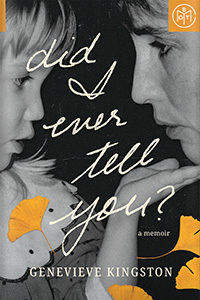
Did I Ever Tell You?
Debut
by Genevieve Kingston
View audiobook
Quick take
In this moving memoir, a woman uses the gifts and letters bequeathed by her mom to navigate her coming-of-age journey.
Good to know

Emotional

Inspirational

Family drama

Nonlinear timeline
Synopsis
Did I Ever Tell You? reads like a novel but is an unforgettable true story.
Genevieve (Gwen) Kingston was just eleven years old when her mother passed away, leaving behind a chest filled with gifts and letters to celebrate the milestones of Gwen’s life and each of her birthdays until age thirty.
When Did I Ever Tell You? opens, just three packages remain: engagement, marriage, and first baby. Tracing Gwen’s coming-of-age, the book reveals a treasure hunt, with each gift and letter unveiling more about her mother, her family, and—ultimately—herself.
Did I Ever Tell You? is a riveting book filled with unexpected twists and powerful life lessons. Through her mother’s fierce and courageous love, Gwen was granted the tools not only to move through grief but to cherish life.
For as her mother says in one of her letters: “love is stronger than death.”
Read a sample
Get an early look from the first pages of Did I Ever Tell You?.
Family drama

































Family drama