

Centennial Editions
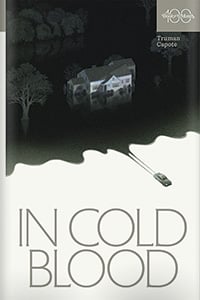
Centennial Editions celebrate our legacy: books we discovered early, believed in deeply, and still stand by. Read them, re-read them, collect them.
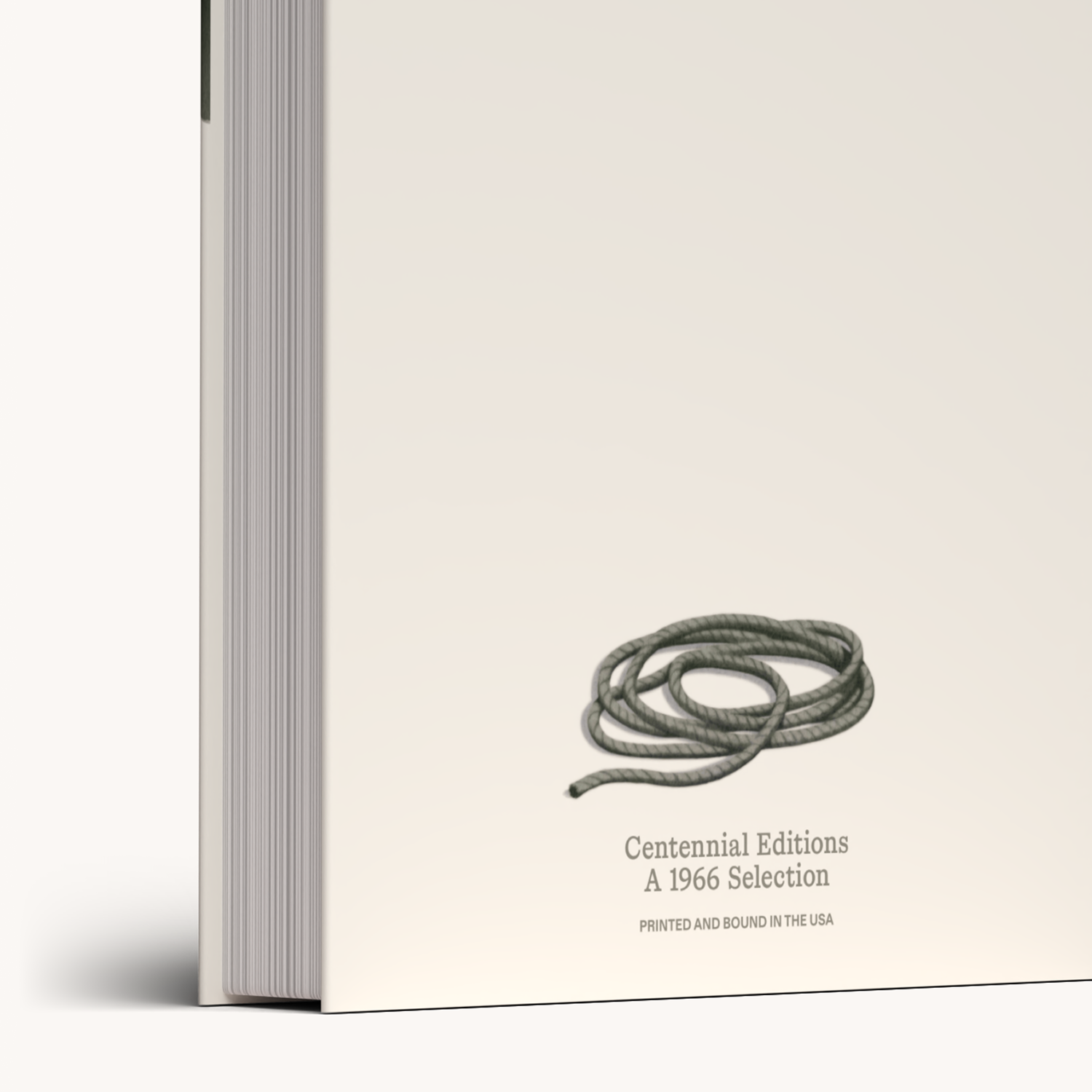
A 1966 Selection.
Centennial Editions
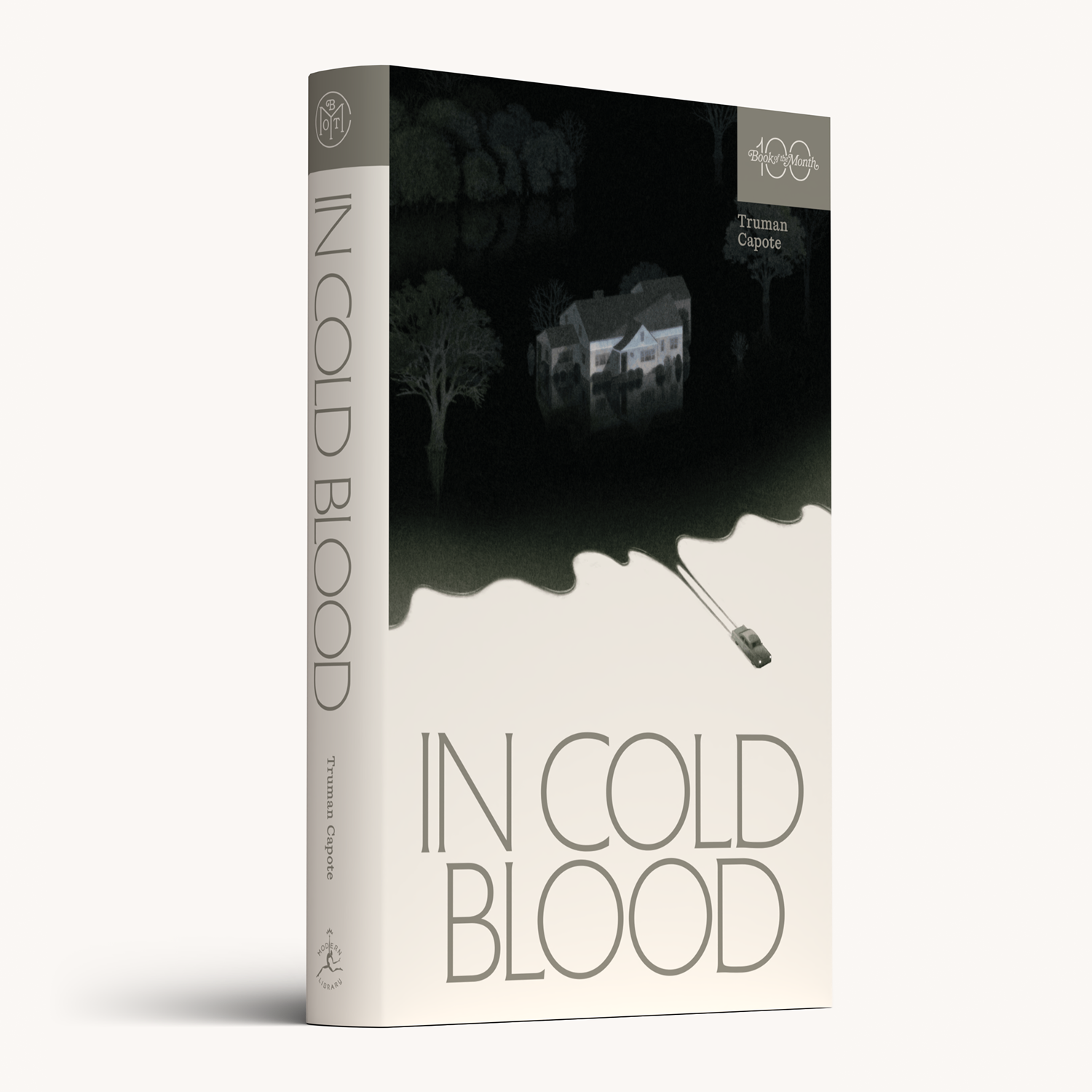
In Cold Blood
by Truman Capote
Save $ with BOTM.
About the author
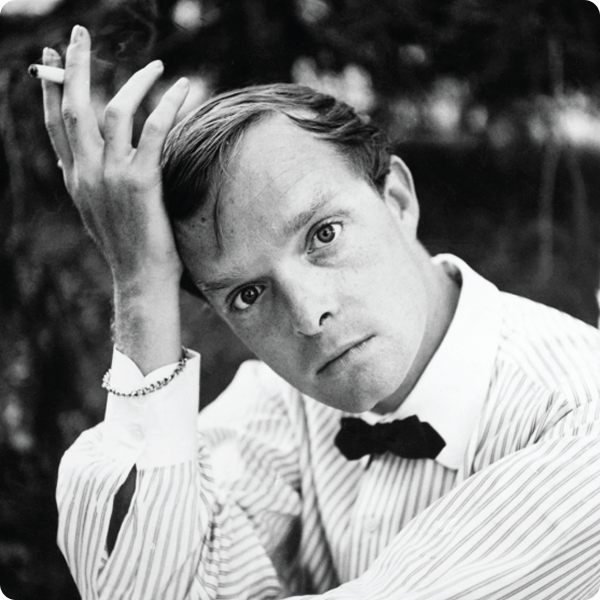
Truman Capote was born Truman Streckfus Persons on September 30, 1924, in New Orleans. After his parents divorced, he moved to New York City to live with his mother and her second husband, whose last name he adopted. He established his literary reputation in his early twenties with the publication of several stories in Harper’s Bazaar. Capote’s early works include Other Voices, Other Rooms (1948), the novella The Grass Harp (1951), and the novel Breakfast at Tiffany’s (1958). As part of the New York literary scene, Capote associated himself with a wide range of writers, artists, and celebrities, gaining frequent media attention for his exuberant social life. He died in 1984 in Bel Air, Los Angeles.
Cultural history: 1966 to now
Columbia Pictures, via Wikimedia Commons.
In Cold Blood inspired two films. The first, an adaptation, was released in theatres in 1967, only a year after the book was published. The movie was filmed in Holcomb, Kansas, where the events of the book took place. Several scenes were even shot in the Clutter family home where the victims were killed.
In 2005, Capote, a film about Truman Capote during the writing of the book, was released to critical acclaim. Capote was played by Philip Seymour Hoffman, who received the Academy Award for Best Actor for his performance. Capote’s friend and biographer Gerald Clarke wrote of Hoffman, “Through the alchemy a very few gifted actors possess, he has done more than impersonate Truman. For the length of the movie, he has resurrected him.”
Capote pitched In Cold Blood as a “nonfiction novel,” a book that “employed all the techniques of fictional art but was nevertheless immaculately factual.” Following in the tradition of New Journalism, Capote aimed to apply the elements of fiction writing to traditional journalism in the form of a gripping crime story.
While Capote was confident in his storytelling capabilities, his journalistic methods were not considered entirely sound. Capote believed that recording interviews “interferes with the communication between author and subject,” and instead relied on his memory to transcribe conversations after the fact. Since the publication of In Cold Blood, many scholars have come to believe that some details in the book are not accurate or, at the very least, lack clear sources or research methods. However, these revelations have done little to hinder the book’s popularity.
Prior to the publication of In Cold Blood, in-depth true crime reporting was mostly confined to tabloid crime magazines such as True Crime and True Detective. These magazines were likely to be found in liquor and grocery stores and often featured colorful, lascivious illustrations of beautiful women in various states of duress.
While the articles themselves were straightforward accounts of police investigations, the stories featured usually involved brutal sex crimes and violent acts towards women, giving them an exploitative, sensationalized feel.
Synopsis
On November 15th, 1959, in the small town of Holcomb, Kansas, four members of the Clutter family were savagely murdered by blasts from a shotgun held a few inches from their faces. There was no apparent motive for the crime, and there were almost no clues.
In one of the first non-fiction novels ever written, Truman Capote reconstructs the murder and the investigation that led to the capture, trial...
Read a sample
Images on this page are provided by: Columbia Pictures, via Wikimedia Commons. Eric Koch for Anefo, via Wikimedia Commons. Author photo by Bettmann/Corbis.
Centennial Editions