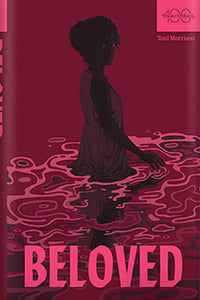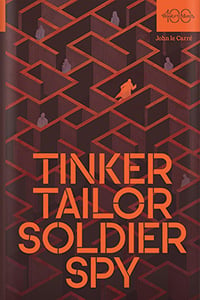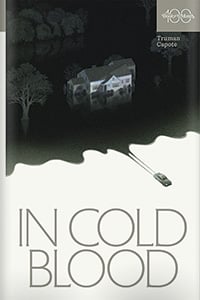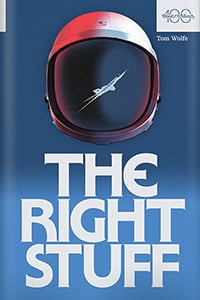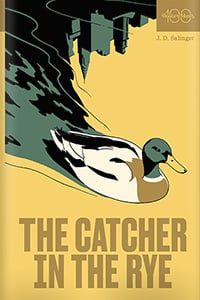


Centennial Editions
Centennial Editions celebrate our legacy: books we discovered early, believed in deeply, and still stand by. Read them, re-read them, collect them.
A 1951 Selection.
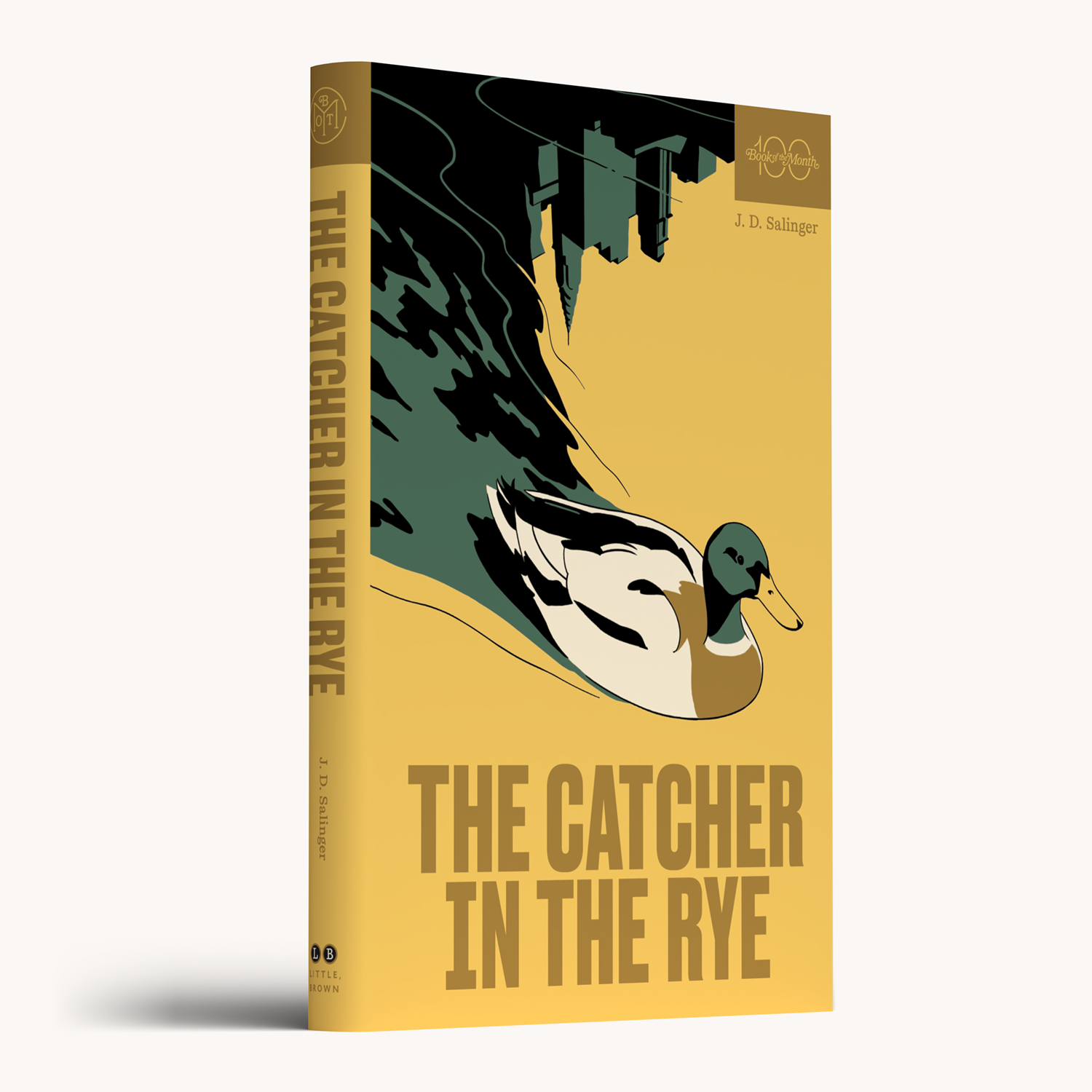


Centennial Editions
The Catcher in the Rye
by J. D. Salinger
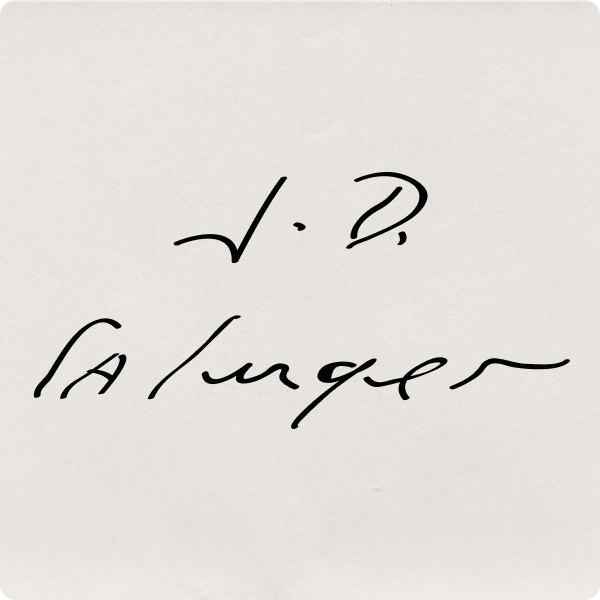
About the author
J. D. Salinger was born in New York City on January 1, 1919, and died in Cornish, New Hampshire, on January 27, 2010. His stories appeared in many magazines, most notably The New Yorker. Between 1951 and 1963 he produced four book-length works of fiction: The Catcher in the Rye; Nine Stories; Franny and Zooey; and Raise High the Roof Beam, Carpenters and Seymour–An Introduction. The books have been embraced and celebrated throughout the world and have been credited with instilling in many a lifelong love of reading.
Cultural history: 1951 to now
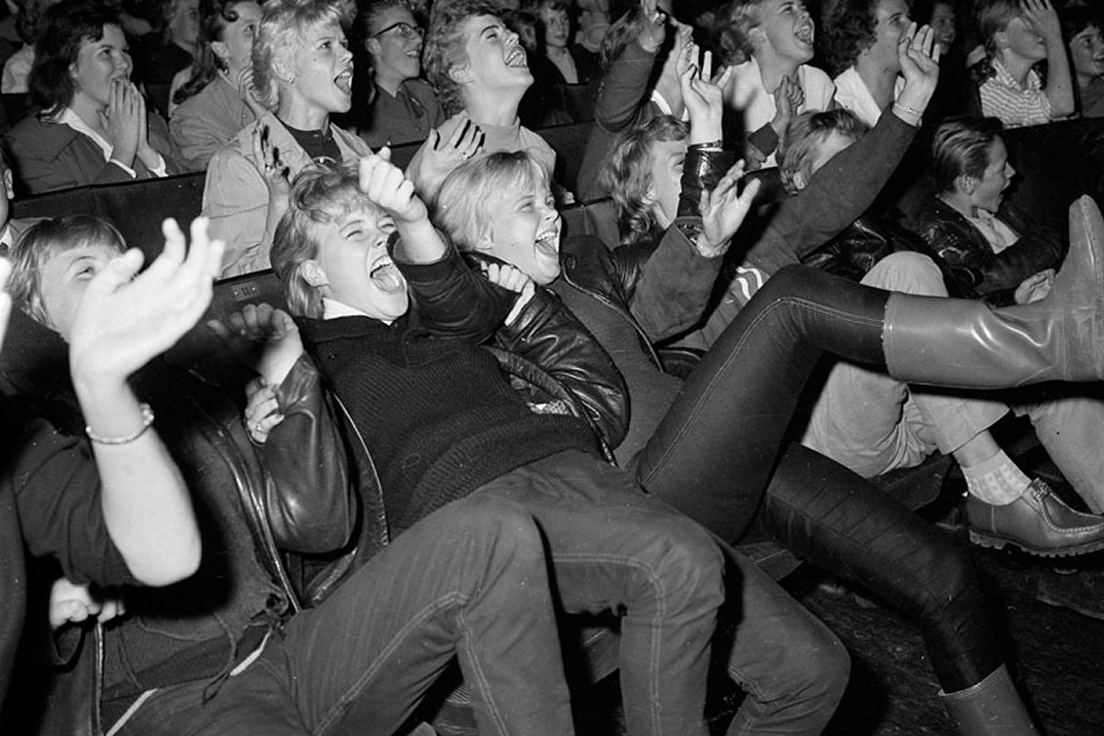
The Catcher in the Rye provides a unique perspective on the turbulence and loneliness of adolescence. Holden Caulfield became the defining symbol of youthful rebellion, galvanizing and validating young readers and paving the way for future nonconformist archetypes.
When the book was written, the word “teenager” was new to common parlance. The concept of adolescence emerged in the booming post-war period when suburban conformity became a central aspect of American cultural identity. Compulsory public education requirements forced teens into insular environments where they established independent social hierarchies and norms. There, students from different class backgrounds formed a unique subculture inspired by blue-collar customs, giving rise to famously nonconformist silver-screen heroes such as Marlon Brando in The Wild One and James Dean in Rebel Without a Cause.
The Catcher in the Rye was a literary sensation, but it has also been associated with instances of horrific acts of violence committed by misguided, obsessive fans. The most notable of these crimes was the assassination of musician John Lennon, the famous Beatles frontman, by Mark David Chapman on December 8, 1980. Chapman shot Lennon in front of his New York City apartment and was apprehended minutes later at the scene of the crime. He was found calmly leafing through a copy of The Catcher in the Rye.
J. D. Salinger staunchly opposed any adaptations of his work despite countless efforts from prominent figures in the entertainment industry, including Billy Wilder and Steven Spielberg. A year before his death, Salinger filed a copyright infringement lawsuit against “J. D. California,” a Swedish author who wrote a “sequel” to The Catcher in the Rye featuring a 76-year-old Holden Caulfield. The book was ultimately banned in the United States.
In a 1957 letter, Salinger explains why he was so resistant to the idea of an adaptation, noting that the idiosyncrasies of Holden's inner monologue are what defined and distinguished him as a character: “For me, the weight of the book is in the narrator's voice, the non-stop peculiarities of it, his personal, extremely discriminating attitude to his reader-listener…in a word, his thoughts. He can't legitimately be separated from his own first-person technique.”
Synopsis
It’s Christmas time and Holden Caulfield has just been expelled from yet another school...
Fleeing the crooks at Pencey Prep, he pinballs around New York City seeking solace in fleeting encounters—shooting the bull with strangers in dive hotels, wandering alone round Central Park, getting beaten up by pimps and cut down by erstwhile girlfriends. The city is beautiful and terrible, in all its neon ...
Read a sample
Images on this page are provided by: Svenska Dagbladet, via Wikimedia Commons. CC0, via Wikimedia Commons.
Centennial Editions