
The Right Stuff by Tom Wolfe
undefined

Get a free gift with your first book.

Join for just $9.99.

We’ll make this quick.

First, enter your email. Then choose your move.

By pressing "Pick a book now" or "Pick a book later", you agree to Book of the Month’s Terms of use and Privacy policy.

Get a free gift with your first book.

Join for just $9.99.

You did it!

Your account is now up to date.

get the app

Our app is where it’s at.

Unlock our Reading Challenge, earn prizes, and get notified of new books on our app.

Our app is where it’s at.

Unlock our Reading Challenge, earn prizes, and get notified of new books on our app.

Download on the App Store
Get it on Google Play

Already have the app? Explore here.

birthday coupon modal image

A birthday treat.

Celebrate your birthday with a free add-on in your June box. It's our way of saying happy birthday, BFF.

Choose your free hat.

Add one to your first box.

Unreliable Narrator hat
Book Person hat
Book Person hat
Checkout without a hat

Please confirm your age.

Are you 0 years old?

Centennial Editions backgroundCentennial Editions background
Collection icon

Centennial Editions

Centennial Editions celebrate our legacy: books we discovered early, believed in deeply, and still stand by. Read them, re-read them, collect them.

A 1979 Selection.
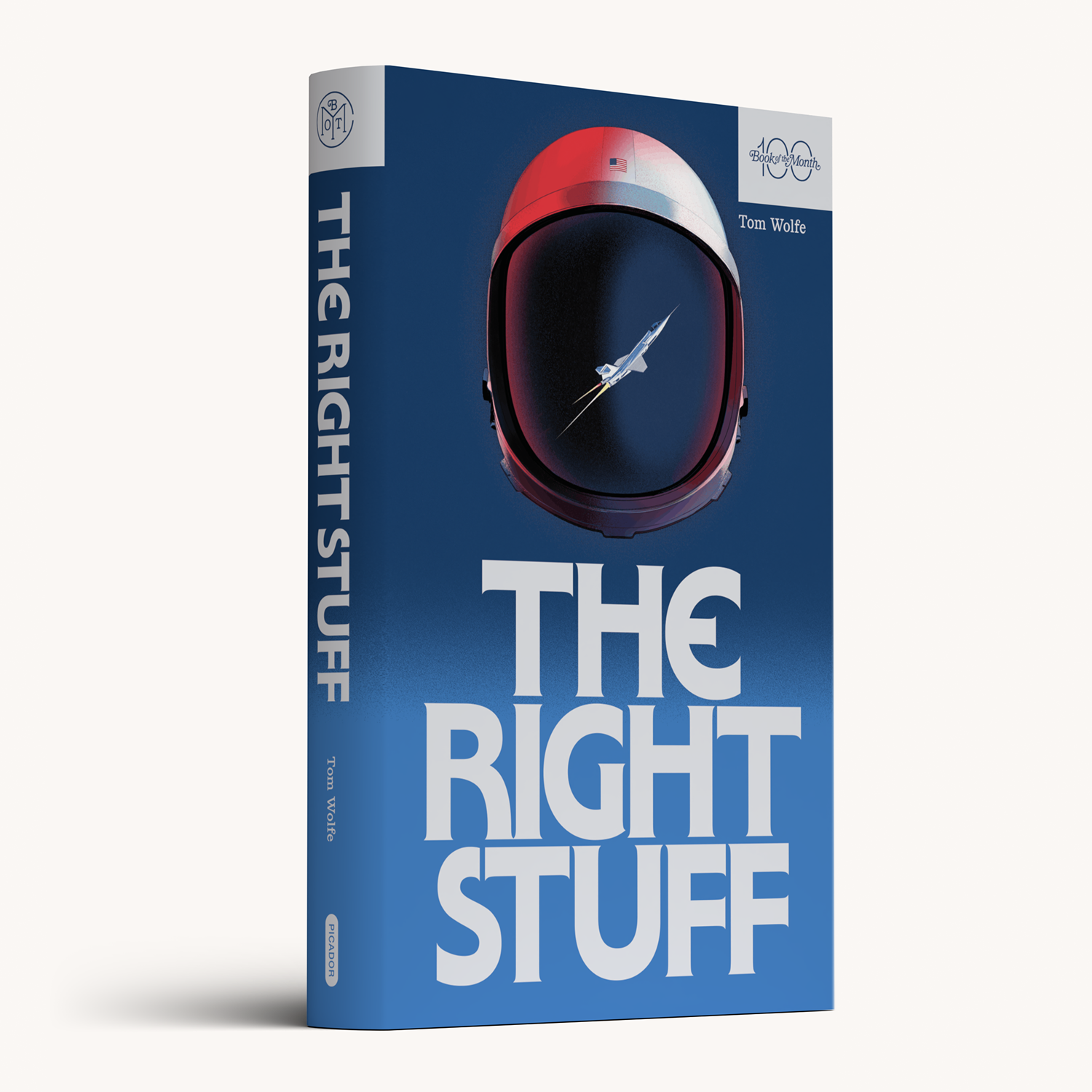
Centennial Editions

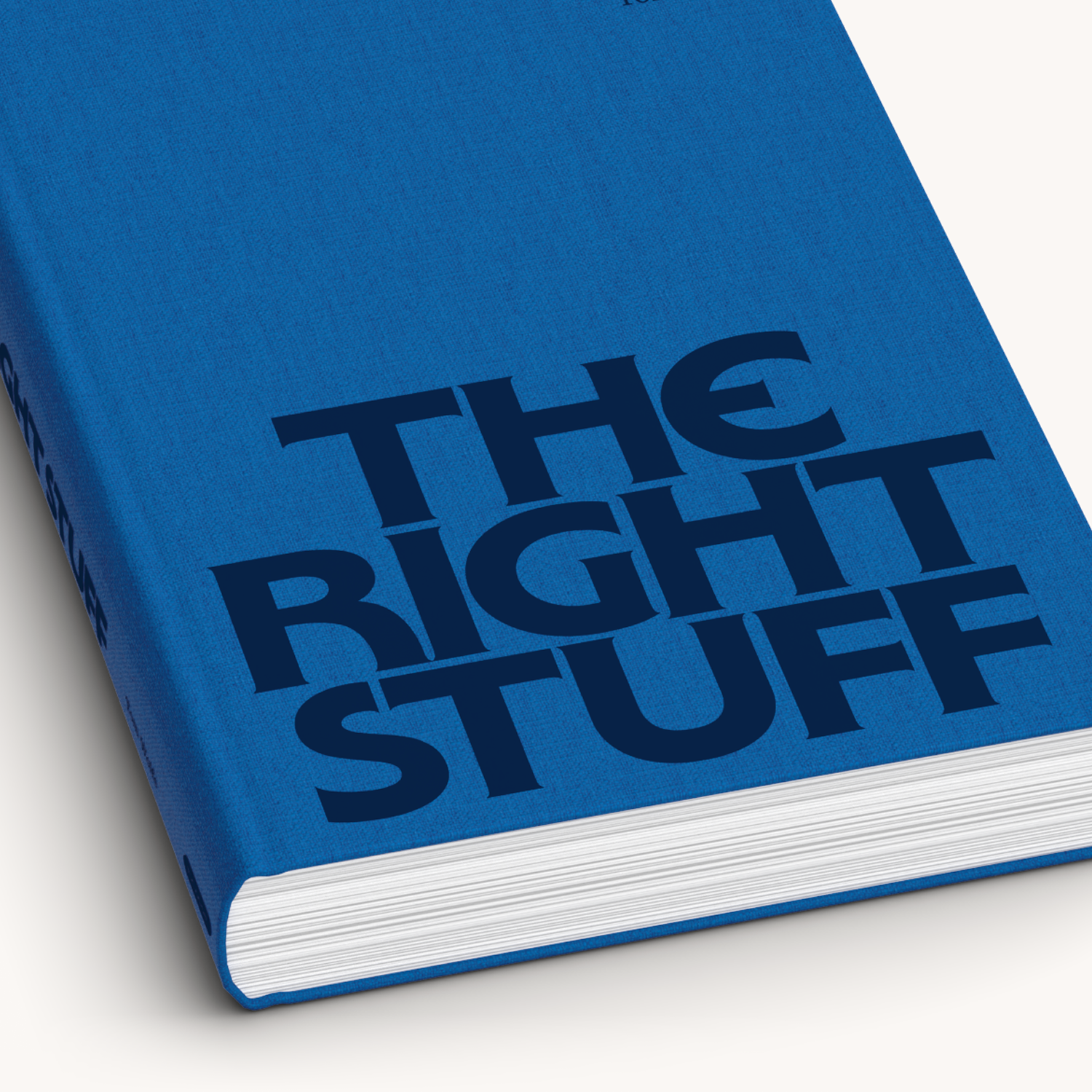
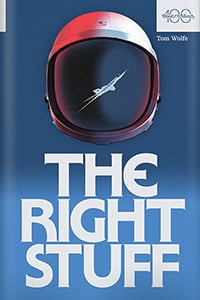
The Right Stuff

by Tom Wolfe
Excellent choice

Just enter your email to add this book to your box.

By pressing "Add to box", you agree to Book of the Month’s Terms of use and Privacy policy.

The gates are closed.

You’re on the waitlist. We’ll email you once you can enroll.

Save $ with BOTM.

Centennial Edition icon

About the author

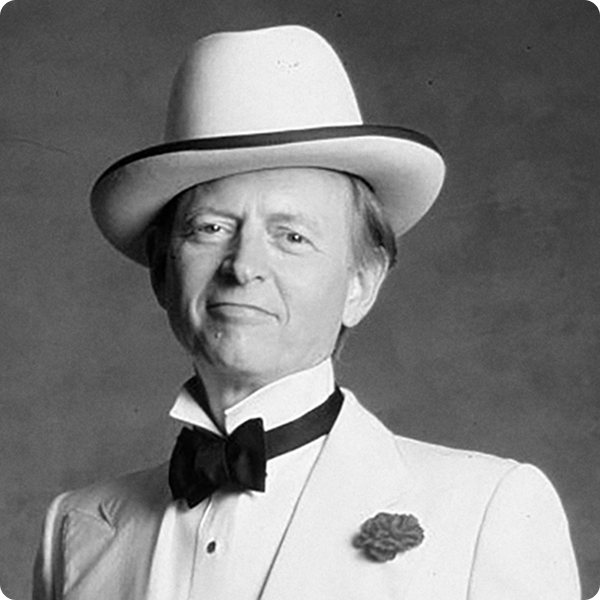
Tom Wolfe was born in Richmond, Virginia, in 1930. He began his writing career as a journalist for publications including The Washington Post, Esquire, and New York magazine. In 1965, he published his first book, The Kandy-Kolored Tangerine-Flake Streamline Baby. A pioneer of the New Journalism movement, he went on to write bestselling fiction and nonfiction including The Electric Kool-Aid Acid Test and The Bonfire of the Vanities. Wolfe received the 1980 National Book Award for The Right Stuff, and the 2010 National Book Foundation Medal for Distinguished Contribution to American Letters. He died in New York City in 2018.

Cultural history: 1979 to now
Warner Bros. Entertainment, via Wikimedia Commons

Warner Bros. Entertainment, via Wikimedia Commons

  • Film
  • Journalism

  • History

The Right Stuff was adapted into a major motion picture in 1983, four years after the book’s publication. Screenwriter William Goldman was initially hired to write the screenplay, but the producers found his adaptation cloyingly patriotic and disagreed with his decision to cut Chuck Yeager—the first pilot to break the sound barrier—from the script. Philip Kaufman was hired to replace Goldman. He later remarked that after reading Goldman’s adaptation he thought, “The movie is called The Right Stuff, but the Right Stuff isn’t in it.”

Under Kaufman’s direction, the film featured Chuck Yeager as a prototypical example of the crucial qualities embodied by American test pilots. Despite disappointing box office sales, the film received multiple Academy Awards, and has endured as an inspiring depiction of the nerve-racking adventures of early space travel.

Tom Wolfe was one of the founders of New Journalism, a form of literary journalism that brought fictional narrative conventions to real stories. The style was popularized by writers including Hunter S. Thompson, Joan Didion, Terry Southern, and Norman Mailer. Wolfe’s writing style was particularly eccentric; his prose was punctuated with unusual idioms, figures of speech, and exclamation points. The Right Stuff is peppered with linguistic oddities such as “Halusian Gulp” and “priapic delirium.”

Before The Right Stuff, works of New Journalism had mostly focused on cultural or urban themes, but Wolfe’s fascination with the Mercury Seven changed this. The Right Stuff exposed audiences to the obscure topic of military flying. Wolfe wrote that this topic “in a literary sense, had remained as dark as the far side of the moon for more than half a century.”

The Right Stuff covered a crucial period of the Cold War, when the United States and the Soviet Union were locked in a race to achieve spaceflight supremacy. The Mercury Space Program was launched in 1958 in direct response to the launch of the Sputnik satellite, which propelled the Soviet Union to the forefront of space exploration and prompted the US to accelerate their efforts.

Book of the Month judge Wilfrid Sheed wrote, “The sky probably means more to Americans than the waves ever meant to Britannia... And Wolfe’s book richly celebrates the culmination of this dream in space.” Sheed aptly identified the deep chord the book struck with US audiences, who were riveted by the race to achieve dominance on the space frontier before the Soviet Union.

Synopsis

What does it take to be an astronaut?

First published in 1979, Tom Wolfe’s astounding book The Right Stuff answers this question and more, exploring both the mental and the physical sacrifices that must be made by individuals entering space. Wolfe tells the stories of the pilots, engineers, and astronauts involved in Project Mercury (1958–1963), the United States’ first human spaceflight program.

...

Read a sample

Get an early look from the first pages of The Right Stuff.

The Right Stuff

I. The Angels

Within five minutes, or ten minutes, no more than that, three of the others had called her on the telephone to ask her if she had heard that something had happened out there.

“Jane, this is Alice. Listen, I just got a call from Betty, and she said she heard something’s happened out there. Have you heard anything?” That was the way they phrased it, call after call. She picked up the telephone and began relaying this same message to some of the others.

“Connie, this is Jane Conrad. Alice just called me, and she says something’s happened…”

Something was part of the official Wife Lingo for tiptoeing blindfolded around the subject. Being barely twenty-one years old and new around here, Jane Conrad knew very little about this particular subject, since nobody ever talked about it. But the day was young! And what a setting she had for her imminent enlightenment! And what a picture she herself presented! Jane was tall and slender and had rich brown hair and high cheekbones and wide brown eyes. She looked a little like the actress Jean Simmons. Her father was a rancher in southwestern Texas. She had gone East to college, to Bryn Mawr, and had met her husband, Pete, at a debutante’s party at the Gulph Mills Club in Philadelphia, when he was a senior at Princeton. Pete was a short, wiry, blond boy who joked around a lot. At any moment his face was likely to break into a wild grin revealing the gap between his front teeth. The Hickory Kid sort, he was; a Hickory Kid on the deb circuit, however. He had an air of energy, self-confidence, ambition, joie de vivre. Jane and Pete were married two days after he graduated from Princeton. Last year Jane gave birth to their first child, Peter. And today, here in Florida, in Jacksonville, in the peaceful year 1955, the sun shines through the pines outside, and the very air takes on the sparkle of the ocean. The ocean and a great mica-white beach are less than a mile away. Anyone driving by will see Jane’s little house gleaming like a dream house in the pines. It is a brick house, but Jane and Pete painted the bricks white, so that it gleams in the sun against a great green screen of pine trees with a thousand little places where the sun peeks through. They painted the shutters black, which makes the white walls look even more brilliant. The house has only eleven hundred square feet of floor space, but Jane and Pete designed it themselves and that more than makes up for the size. A friend of theirs was the builder and gave them every possible break, so that it cost only eleven thousand dollars. Outside, the sun shines, and inside, the fever rises by the minute as five, ten, fifteen, and, finally, nearly all twenty of the wives join the circuit, trying to find out what has happened, which, in fact, means: to whose husband.

Create a free account!

Sign up to see book details, our quick takes, and more.

By pressing "Sign up", you agree to Book of the Month’s Terms of use and Privacy policy.

Images on this page are provided by: Warner Bros. Entertainment, via Wikimedia Commons. MoSchle, via Wikimedia Commons. Soyuz235, via Wikimedia Commons. Author photo by Lynn Goldsmith / Corbis Historical / Getty Images.

Centennial Editions
The Right Stuff
The Catcher in the Rye
Brideshead Revisited
Native Son
All Quiet on the Western Front