

Tinker, Tailor, Soldier, Spy by John le Carré
undefined

Get a free gift with your first book.

Join for just $5.

We’ll make this quick.

First, enter your email. Then choose your move.

By pressing "Pick a book now" or "Pick a book later", you agree to Book of the Month’s Terms of use and Privacy policy.

Get a free gift with your first book.

Join for just $5.

You did it!

Your account is now up to date.

get the app

Our app is where it’s at.

Unlock our Reading Challenge, earn prizes, and get notified of new books on our app.

Our app is where it’s at.

Unlock our Reading Challenge, earn prizes, and get notified of new books on our app.

Download on the App Store
Get it on Google Play

Already have the app? Explore here.

birthday coupon modal image

A birthday treat.

Celebrate your birthday with a free add-on in your September box. It's our way of saying happy birthday, BFF.

Choose your free gift.

Add one to your first box.

I Brought My Book tote
Unreliable Narrator tote
I'd Rather Be Reading hat
Checkout without a gift

Please confirm your age.

Are you 0 years old?

Centennial Editions backgroundCentennial Editions background
Collection icon

Centennial Editions

Centennial Editions celebrate our legacy: books we discovered early, believed in deeply, and still stand by. Read them, re-read them, collect them.

A 1974 Selection.
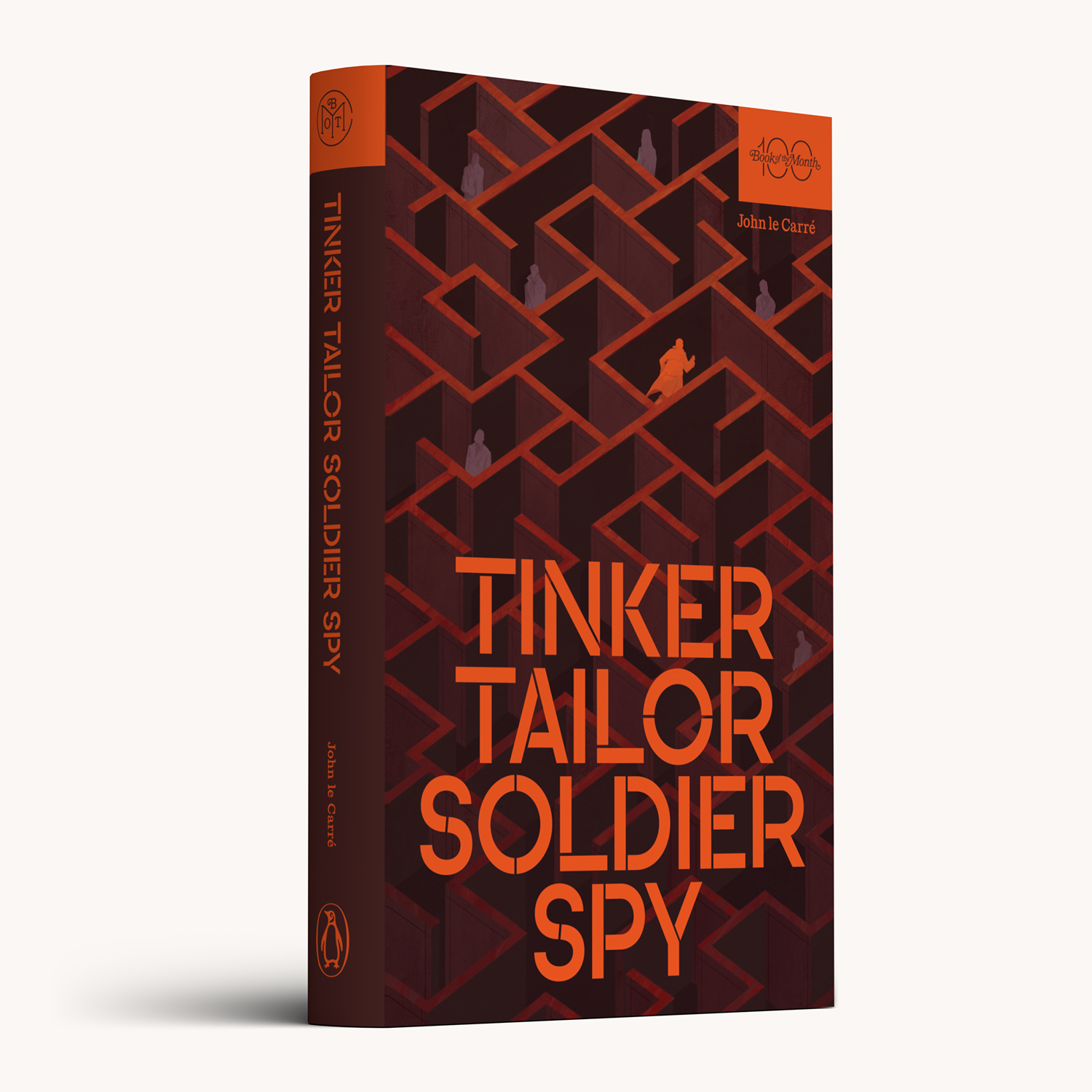
Centennial Editions

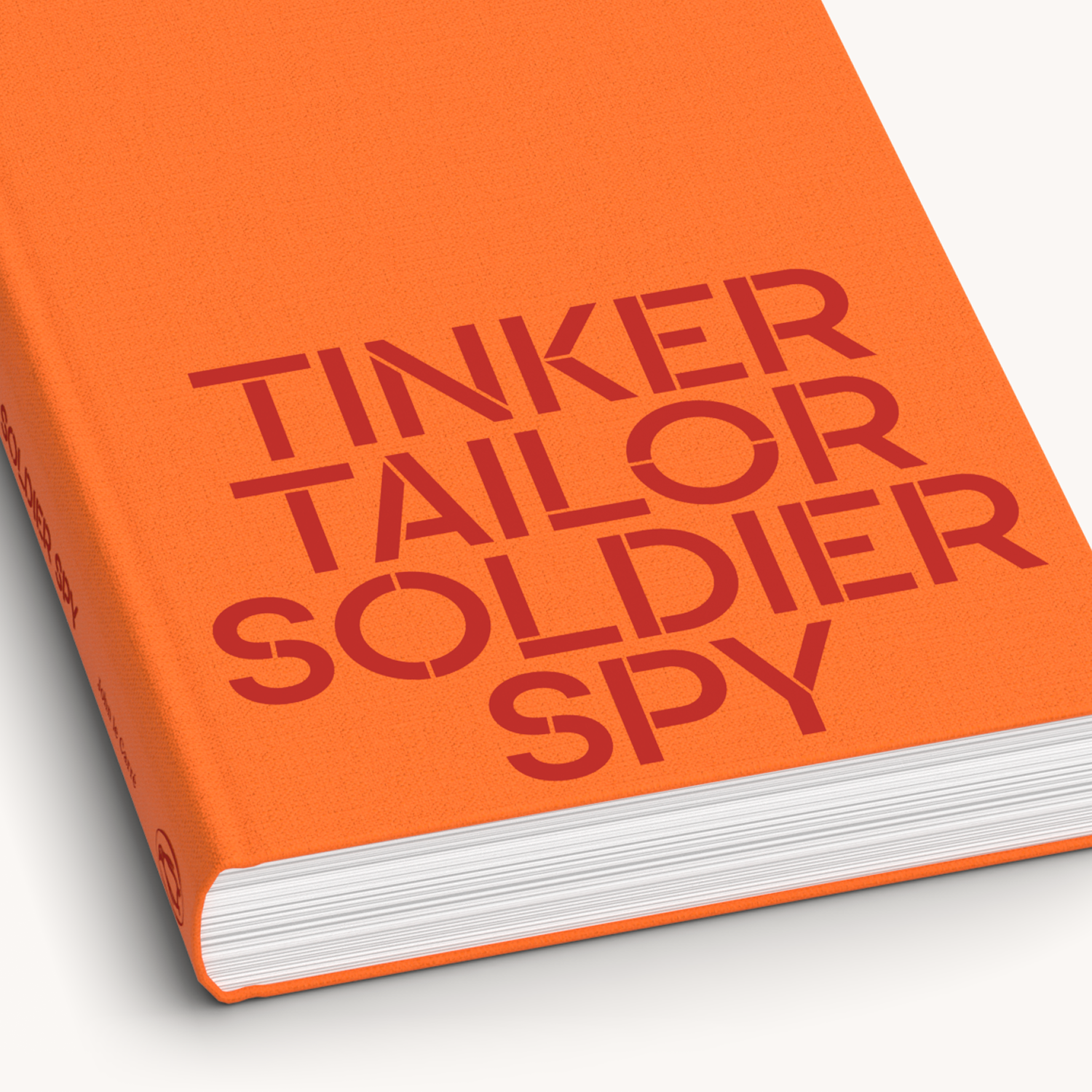
Tinker, Tailor, Soldier, Spy

by John le Carré

Excellent choice

Just enter your email to add this book to your box.

By pressing "Add to box", you agree to Book of the Month’s Terms of use and Privacy policy.

The gates are closed.

You’re on the waitlist. We’ll email you once you can enroll.

Centennial Edition icon

About the author

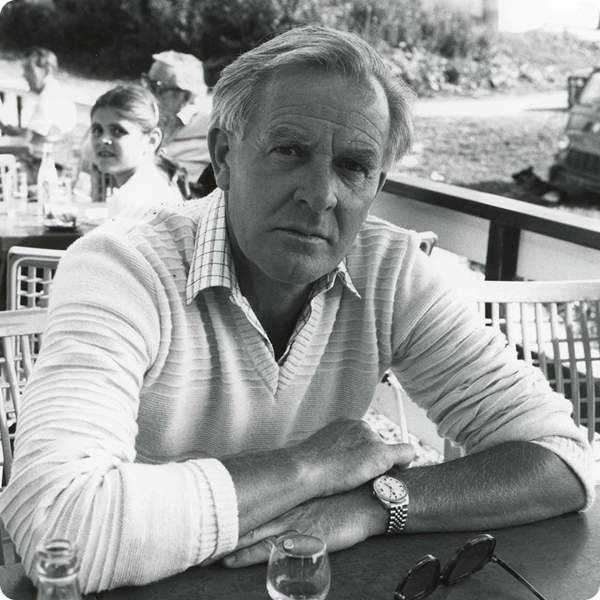
John le Carré was born in Poole, England, in 1931. After attending Oxford University, he began a career in British Intelligence at MI5 and MI6. His debut novel, Call for the Dead, was published in 1961 while he was still a secret servant. His third novel, The Spy Who Came in from the Cold, secured him a worldwide reputation, which was consolidated by the acclaim for his trilogy Tinker, Tailor, Soldier, Spy, The Honourable Schoolboy, and Smiley’s People. John le Carré died in 2020 in Truro, England.

Cultural history: 1974 to now
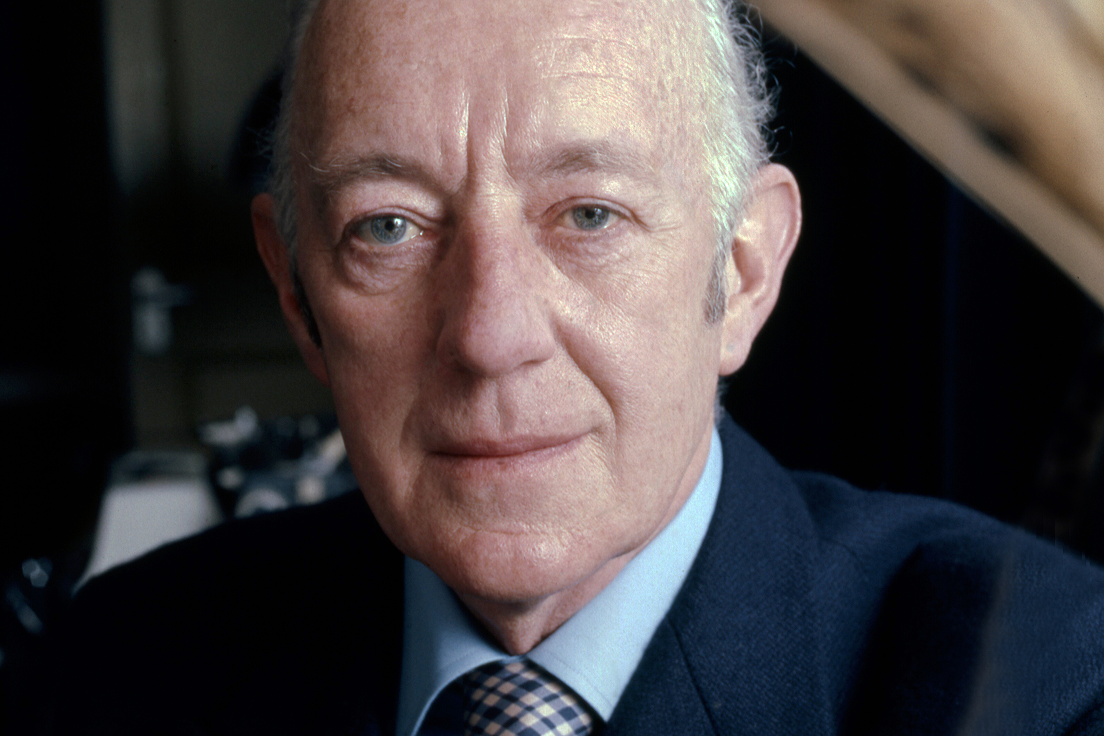
Allan Warren, via Wikimedia Commons

Allan Warren, via Wikimedia Commons

  • Television
  • Film

  • History

In 1979, Tinker, Tailor, Soldier, Spy was adapted into a 7-episode BBC miniseries starring Sir Alec Guinness as George Smiley. The series was filmed in London in 1978, between Guinness’s iconic performances as Obi-Wan Kenobi in Star Wars (1977) and The Empire Strikes Back (1980). Le Carré deemed the BBC series his favorite adaptation of his work, partly due to his experience working with Guinness.

While well-received, the series was famously complex. Clive James of The Observer called it “incomprehensible,” but ultimately stated that it “lived up to the standard of the original novel.”

Remarking on the complicated plotline and notable “bluffs,” director John Irvin said, “What we wanted to reveal dramatically was the complexity of the secret state. The contradictions, the betrayals of loyalty.”

In 2011, Tinker, Tailor, Soldier, Spy was adapted into a feature film starring Gary Oldman as George Smiley, alongside an ensemble cast including Colin Firth, Tom Hardy, and Benedict Cumberbatch. The film was lauded by critics for capturing the quiet intensity and cunning of John le Carré’s novel. Le Carré himself made a cameo as an extra in the film, appearing as a drunken guest at the agency’s holiday party.

The film spent three consecutive weeks at the top of the British box office chart and was critically acclaimed. Oldman was nominated for an Academy Award for his performance, and le Carré stated that Alec Guinness (1914–2000), who played Smiley in the 1979 miniseries, “would have been the first to give it a standing ovation.”

Born David Cornwell, John le Carré began writing and publishing novels while working for MI5 and MI6 as an intelligence officer. His pseudonym was necessitated by the Foreign Office’s policy of forbidding employees from writing under their own names. His intelligence career came to an end in the aftermath of the exposure of Kim Philby, the notorious British double agent who spent years passing secrets to the Soviet Union as part of the Cambridge Five spy ring. That experience would become the foundation for Tinker, Tailor, Soldier, Spy.

Synopsis

It is now beyond a doubt that a mole, implanted decades ago by Moscow Centre, has burrowed his way into the highest echelons of British Intelligence. His treachery has already blown some of its most vital operations and its best networks. It is clear that the double agent is one of its own kind. But which one? George Smiley is assigned to identify him. And once identified, the traitor must be dest...

Read a sample

Get an early look from the first pages of Tinker, Tailor, Soldier, Spy.

Tinker, Tailor, Soldier, Spy

1

The truth is, if old Major Dover hadn’t dropped dead at Taunton races Jim would never have come to Thursgood’s at all. He came in ­mid-term without an interview—late May, it was, though no one would have thought it from the weather—employed through one of the shiftier agencies specialising in supply teachers for prep schools, to hold down old Dover’s teaching till someone suitable could be found. “A linguist,” Thursgood told the ­common-room, “a temporary measure,” and brushed away his forelock in self-defence. “Priddo.” He gave the spelling, ­“P-r-i-d”—French was not Thursgood’s subject so he consulted the slip of paper—“e-a-u-x, first name James. I think he’ll do us very well till July.” The staff had no difficulty in reading the signals. Jim Prideaux was a poor white of the teaching community. He belonged to the same sad bunch as the late Mrs. Loveday, who had a ­Persian-lamb coat and stood in for junior divinity until her cheques bounced, or the late Mr. Maltby, the pianist who had been called from choir practice to help the police with their enquiries, and as far as anyone knew was helping them to this day, for Maltby’s trunk still lay in the cellar awaiting instructions. Several of the staff, but chiefly Marjoribanks, were in favour of opening that trunk. They said it contained notorious missing treasures: Aprahamian’s silver-framed picture of his Lebanese mother, for instance; ­Best-Ingram’s Swiss army penknife and Matron’s watch. But Thursgood set his creaseless face resolutely against their entreaties. Only five years had passed since he had inherited the school from his father, but they had taught him already that some things are best locked away.

Jim Prideaux arrived on a Friday in a rainstorm. The rain rolled like ­gunsmoke down the brown combes of the Quantocks, then raced across the empty cricket fields into the sandstone of the crumbling façades. He arrived just after lunch, driving an old red Alvis and towing a ­second-hand trailer that had once been blue. Early afternoons at Thursgood’s are tranquil, a brief truce in the running fight of each school day. The boys are sent to rest in their dormitories, the staff sit in the­ common-room over coffee reading newspapers or correcting boys’ work. Thursgood reads a novel to his mother. Of the whole school, therefore, only little Bill Roach actually saw Jim arrive, saw the steam belching from the Alvis’s bonnet as it wheezed its way down the pitted drive, windscreen wipers going full pelt and the trailer shuddering through the puddles in pursuit.

Create a free account!

Sign up to see book details, our quick takes, and more.

By pressing "Sign up", you agree to Book of the Month’s Terms of use and Privacy policy.

Images on this page are provided by: Allan Warren, via Wikimedia Commons. Sam Hughes, via Wikimedia Commons. USSR Post, via Wikimedia Commons. Author photo by Stephen Cornwell.

Centennial Editions

Tinker, Tailor, Soldier, Spy
In Cold Blood
The Right Stuff
The Catcher in the Rye
Brideshead Revisited
Native Son
All Quiet on the Western Front